
TL;DR
- An aquarium measuring cup is a daily-use maintenance tool, not a shelf warmer: water changes, top-offs, salt mixing, dosing and fish acclimation all need one.
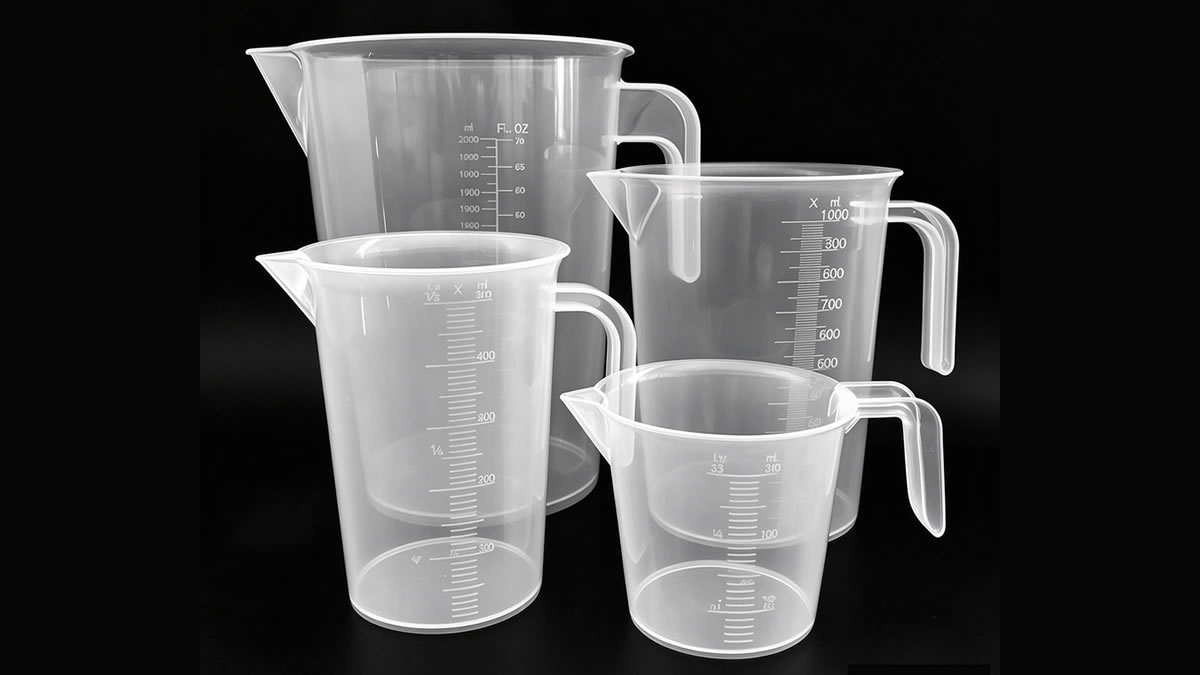
- Four sizes cover the market — 250 / 500 / 1000 / 2000 ml — with ml and FL OZ scales molded into thick, break-resistant PP.
- The hang-on rim handle is the feature customers ask about first: it turns the cup into a hands-free part of the tank.
- For retailers it is a high-margin, high-repeat SKU that pairs naturally with salt, fertilizer and water-change kits.
- Wholesale buyers can private-label the cup, and the MOQ starts at 10 pieces.
Every retailer knows the big-ticket aquarium SKUs: filters, heaters, lights. But the products that build repeat footfall are the small ones customers use every day. An aquarium measuring cup sits in that second group. It is cheap, it gets used daily, and once a customer owns one, they replace it only when they lose it. That is exactly why it belongs on your shelf, and this guide walks you through what it is, how it sells, and how to stock it without guessing.
What Is an Aquarium Measuring Cup?
An aquarium measuring cup is a graduated plastic cup designed for aquarium water handling. Unlike a kitchen measuring cup, it is built for the tank: impact-resistant PP that survives drops onto the floor, a hang-on handle that clips onto the tank rim, and dual scales. Milliliters sit on one side, fluid ounces on the other, so both metric and imperial buyers read it instantly.
The aquarium measuring cup with handle version is the one most retailers choose. The handle does more than carry the cup: it hooks over the rim, so the cup lives on the tank, ready for a top-off or a water change without a trip to the cabinet.
Why Retailers Should Stock Measuring Cups
Three numbers explain the opportunity. First, frequency: most hobbyists touch a measuring cup at least once a day, for feeding prep, top-offs or water changes. Second, margin: a small plastic item carries 50-70% retail margin with almost no support cost. Third, repeat: measuring cups get lost, cracked or gifted to a friend starting a new tank, and the replacement habit is real.
It is also the easiest add-on sale in the store. A customer buying salt is told “you need a cup to mix it correctly,” and that is a sale. A customer buying fertilizer is told “dose it in a clean cup first,” and that is a sale. The cup rides along on every maintenance purchase.
5 Everyday Uses That Sell Aquarium Measuring Cups
The easiest way to sell a tool is to show the jobs it does. Here are the five jobs that come up every week in a hobbyist store.
1. Water changes and gravel cleaning
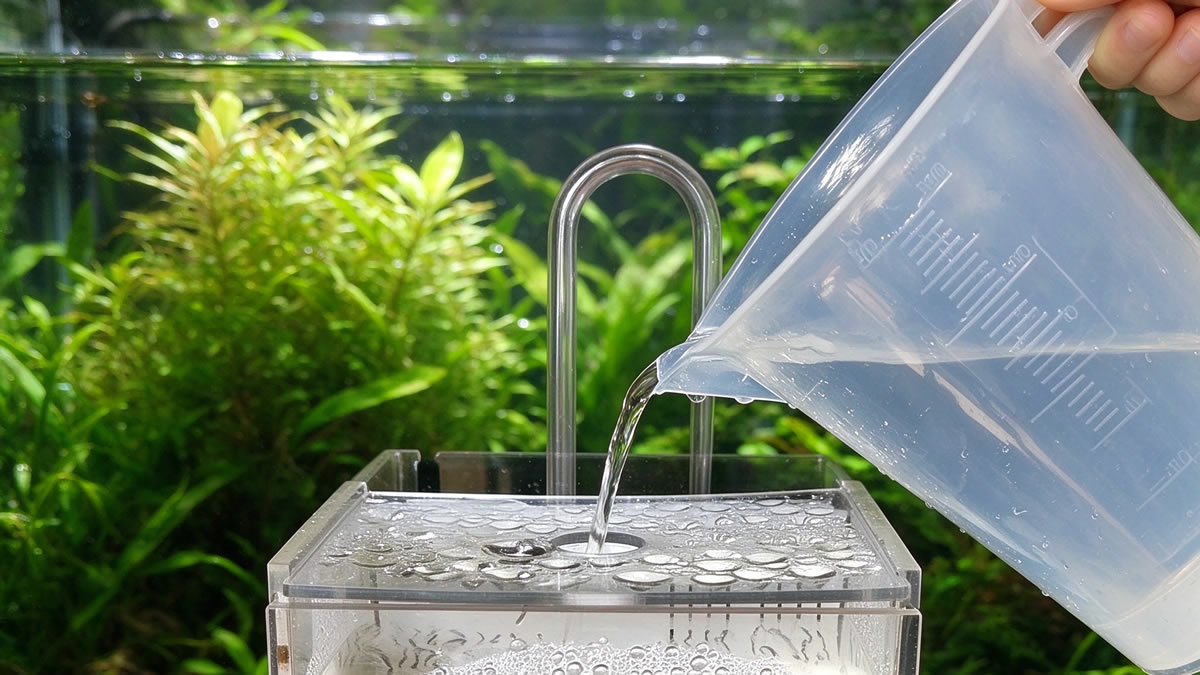
Small tanks from 5 to 20 gallons are where the measuring cup shines. One cup is one bucket: scoop out, refill, done. For the fuller routine, pair the cup with a siphon; our guide on how to clean fish tank gravel walks through the complete workflow your staff can teach in one minute.
2. Top-offs between water changes
Evaporation is invisible but daily. A 1000 ml cup hanging on the rim makes the top-off a five-second habit, which is exactly the kind of routine that keeps tanks stable and customers coming back.
3. Mixing saltwater
Salt mixes need a measured water volume to hit the target salinity. A freshwater aquarium measuring cup with clean marks gives the hobbyist the same precision as a lab beaker at a fraction of the cost, and it is the SKU that walks out with every bag of salt you sell.
4. Dosing liquid fertilizer and water conditioners
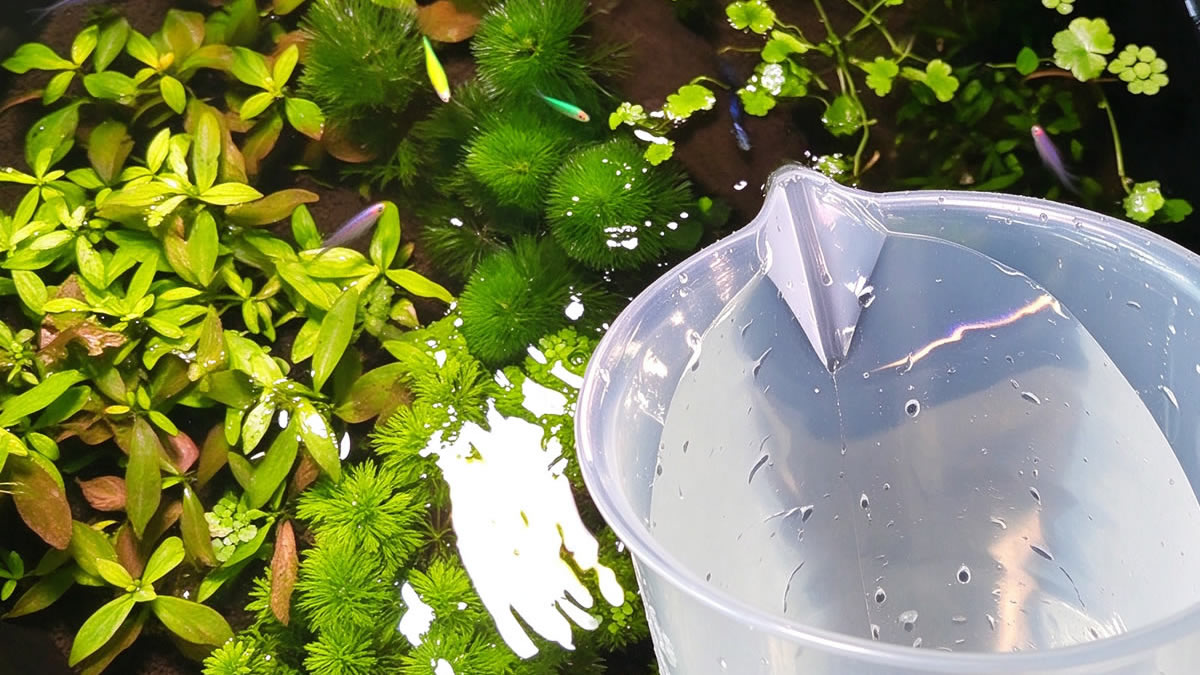
Liquid fertilizers and water conditioners are dosed in milliliters. Guessing ruins the dose; a graduated cup removes the guess. This single use alone justifies the SKU for planted-tank customers and precise dosing routines.
5. Acclimating and holding new fish
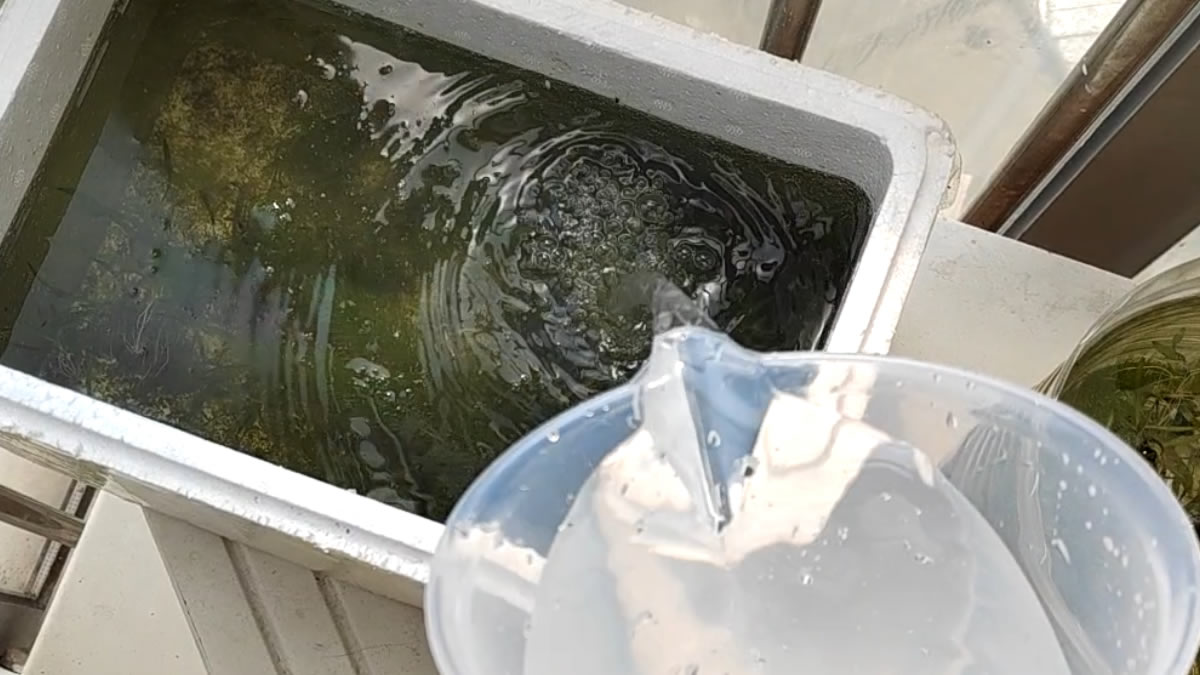
When a new fish arrives, hobbyists need clean, tempered water to drip-acclimate or hold the fish before release. A 2000 ml cup is the right size for a drip-acclimation hold or a temporary keep, and it is far safer than a net and a bowl.
How to Measure Water in a Fish Tank
Knowing how much water a tank holds is the first step to changing, dosing or maintaining it. Staff hear “how to measure water in fish tank?” every week, so here is the three-step answer we teach retail teams.
Step 1 — Calculate the tank volume. For a rectangular tank, multiply length by width by water depth in inches, then divide by 231 to get gallons. For metric, multiply in centimeters and divide by 1000 to get liters. Many customers skip this and guess; the cup settles the argument.
Step 2 — Set the change volume. The standard weekly change is 10-25% of the tank volume. For a 10-gallon tank, that is 1-2.5 gallons, roughly four to ten 1000 ml cups.
Step 3 — Measure, don’t estimate. This is where the cup earns its place. A 1000 ml aquarium measuring cup turns “roughly half a bucket” into an exact 1-liter dose, which matters for salt mixes and precise dosing.
Which Aquarium Measuring Cup Sizes Should You Stock?
Four sizes cover the hobby from nano tanks to large freshwater systems. Stock the full set, because the differentiator is having the size the customer needs right now. For most stores, the 1000 ml is the freshwater aquarium measuring cup that moves first, with the smaller sizes following as add-ons.
| Size | Ideal for | Suggested stocking ratio |
|---|---|---|
| 250 ml | Nano tanks, fry feeding, dosing fertilizer | 2 cases |
| 500 ml | Small freshwater tanks, daily top-offs | 2 cases |
| 1000 ml | Standard tanks, water changes, salt mixing | 3 cases |
| 2000 ml | Large tanks, acclimation, temporary holds | 1 case |
What to Look for in a Wholesale Aquarium Measuring Cup
Not all measuring cups are built the same, and the differences decide returns, complaints and repeat orders. Four features separate a good wholesale line from a cheap one.
1. Thick PP walls. A thin cup cracks on the wet floor of a fish room; a thick-walled cup survives drops and squeezes. A 2 mm-plus wall on a quality cup is the single biggest reducer of breakage claims.
2. A hang-on handle. The aquarium measuring cup with handle that stays on the rim is what customers vote for with their wallets. Make sure the handle clips firmly and releases without breaking, since this is the feature your staff will demo.
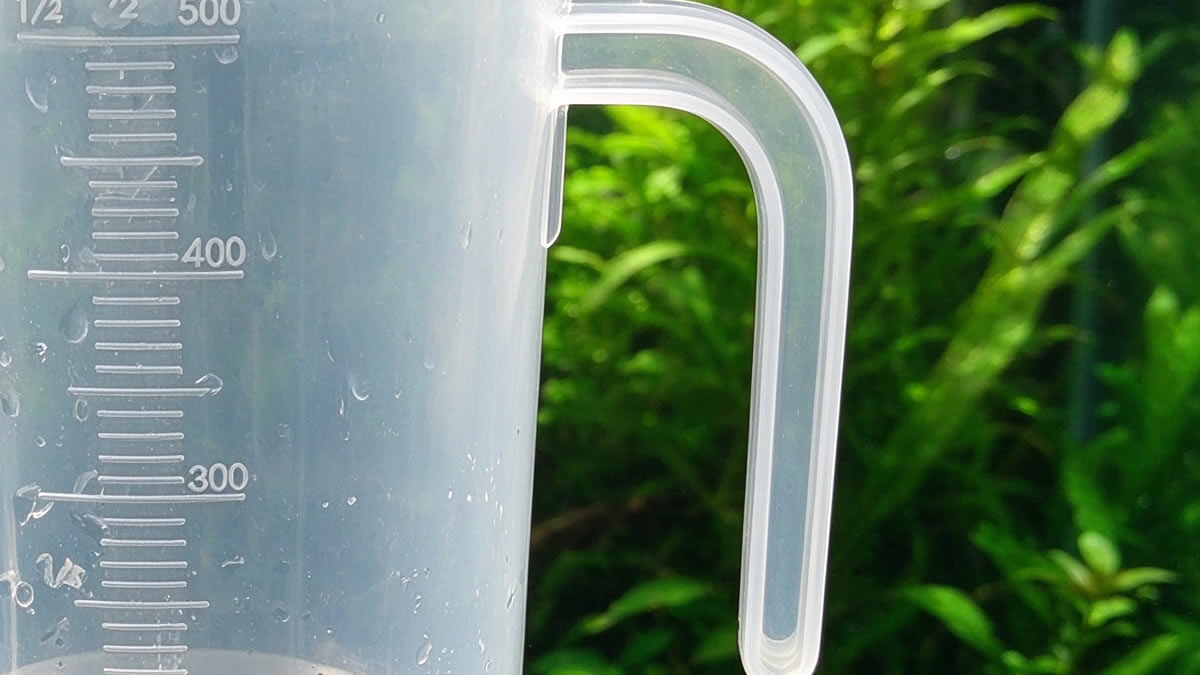
3. Dual ml and FL OZ scales. Some markets read metric, some read imperial. A dual-scale cup sells to both without a second SKU, and molded marks survive washing better than printed ones.
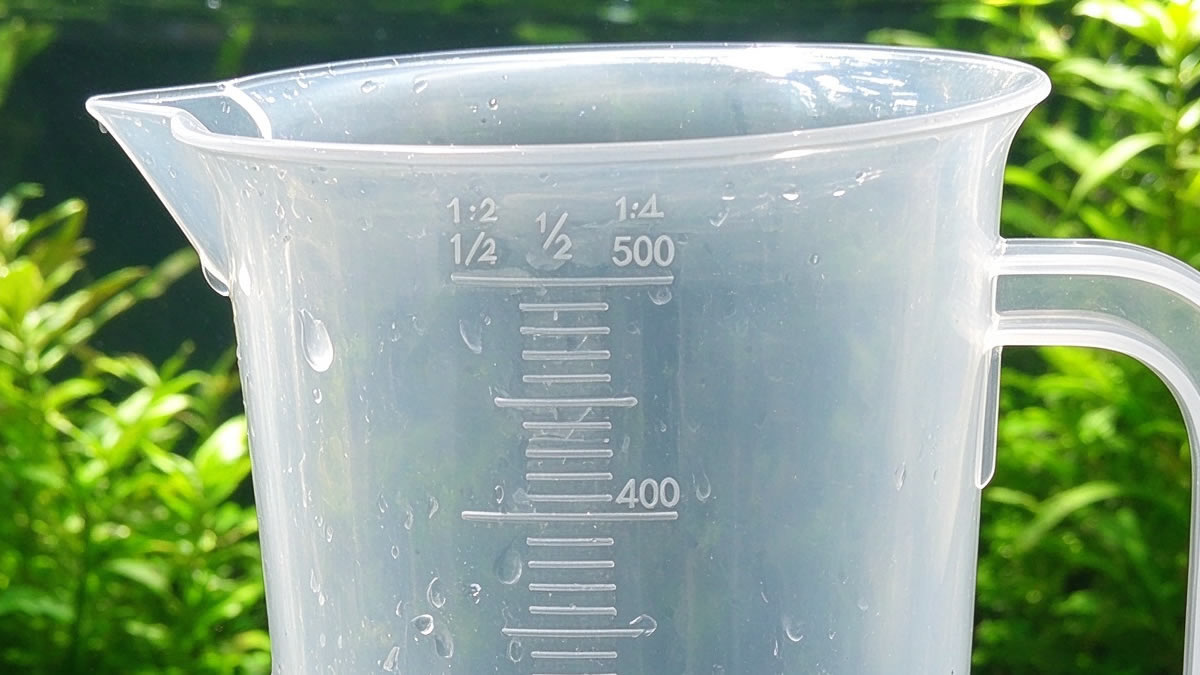
4. Clear, durable material. Visibility sells: customers want to see the water line. Durable PP is the default for anything that touches tank water.
When you buy in volume, the same features that protect your customers also protect your margin: fewer breakage claims, fewer returns, and a line that reorders on its own. That is the case for sourcing wholesale aquarium measuring cups from a factory line that already ships to retail chains. And if you want your own brand on the handle, our private label aquarium supplies program covers the logo, packaging and mixed-container orders.
Frequently Asked Questions
What sizes do aquarium measuring cups come in?
Standard wholesale lines carry 250, 500, 1000 and 2000 ml. The 1000 ml is the fastest-moving single size for everyday water changes.
Can an aquarium measuring cup hang on the tank rim?
Yes. The handle clips over the rim so the cup stays on the tank, ready for top-offs and small water changes without storage space.
Is the measuring cup safe for saltwater use?
Yes. Durable PP resists saltwater corrosion, and the same SKU works for freshwater and marine tanks.
What is the MOQ for wholesale aquarium measuring cups?
The MOQ is 10 pieces per size. OEM orders for logo, packaging or mixed sizes are available on request.
Can I use the same cup for dosing and normal water changes?
Use a dedicated cup for fertilizer and conditioner dosing to avoid residue. A 250 ml cup keeps traces out of top-off routines.
Conclusion: The Small SKU with the Daily Habit
Measuring cups do not look like a hero product, and that is the opportunity. They are used daily, break rarely, pair with every maintenance category, and reorder quietly. That is the profile of a dependable margin line. Stock all four sizes, demo the hang-on handle, teach the five uses, and let the counter placement do the selling.
Ready to build the line? Talk to us about bulk pricing, samples and private label aquarium supplies — we ship from the factory in 7-15 working days.
Written by the ProAquaWorks sourcing team. We supply aquarium maintenance tools to retailers, wholesalers and e-commerce sellers worldwide. Meet the team.