
TL;DR
- We ran this aquarium measuring cup review over three weeks of daily use with the 250–2000 ml graduated cup: water changes, salt mixing, dosing and acclimation. It earned a permanent place on the shelf.
- The dual ml / FL OZ scale is the feature customers actually use daily; the hang-on rim handle keeps it next to the tank, not in a drawer.
- The 1000 ml and 500 ml sizes carried most of the work; the 2000 ml earns its place for larger tanks and salt mixing.
- Retailers: this is a repeat-sale, low-return accessory. Shelf it where the water-change products live.
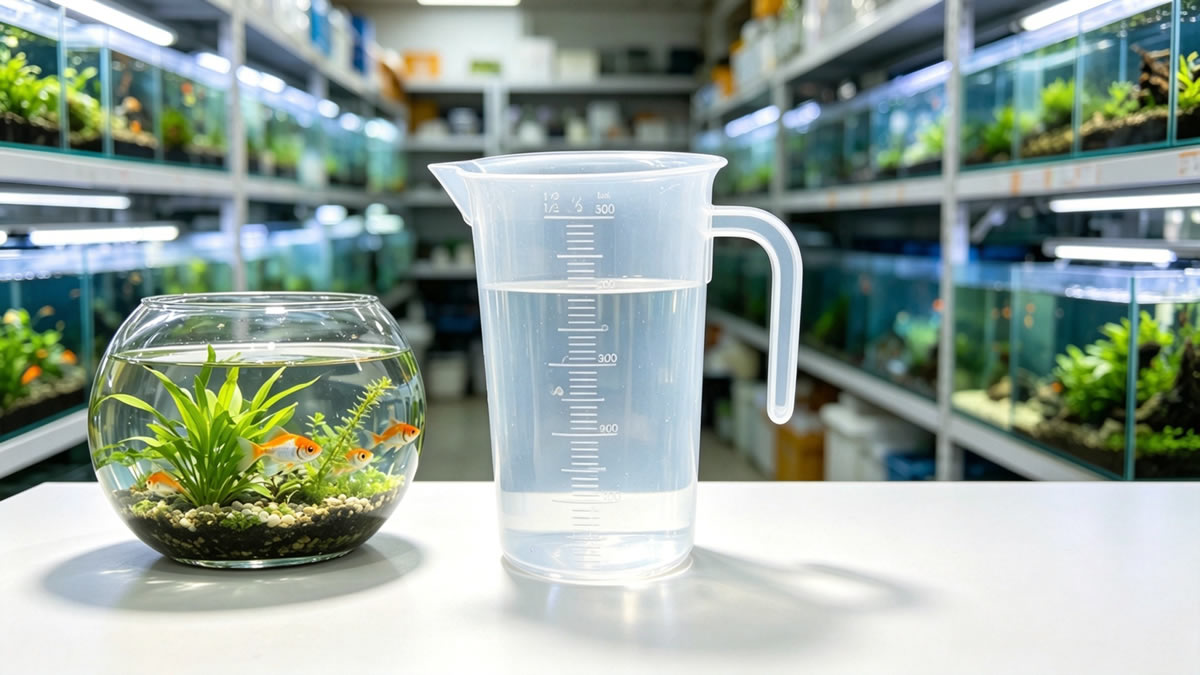
1. Why We Ran an Aquarium Measuring Cup Review
A spec sheet tells you what a product should do. A field test tells you what customers will actually do with it. Over three weeks, we used the aquarium measuring cup review unit daily in the jobs a hobbyist runs every week: topping off a small tank, mixing saltwater for a quarantine tank, dosing algae remover at 10:1, and acclimating new fish.
For a retailer the question is simple: does this accessory earn counter space, or does it sit in a warehouse? Our test says it earns it. The cup is used constantly, not occasionally.
Retailer takeaway: position the measuring cup as the “everyday tool” next to water change products. It is the item customers reach for daily, not a seasonal buy.
2. The Aquarium Measuring Cup Sizes That Earned Their Shelf Space
The line ships in four sizes: 250 ml, 500 ml, 1000 ml and 2000 ml. After three weeks of this aquarium measuring cup review, the usage split was clear.
- 250 ml: quick top-offs on nano tanks and dips for a single sick fish. Small, but it rounds out the set.
- 500 ml: the daily driver for small and mid-size tanks. A couple of scoops out, a couple of scoops back.
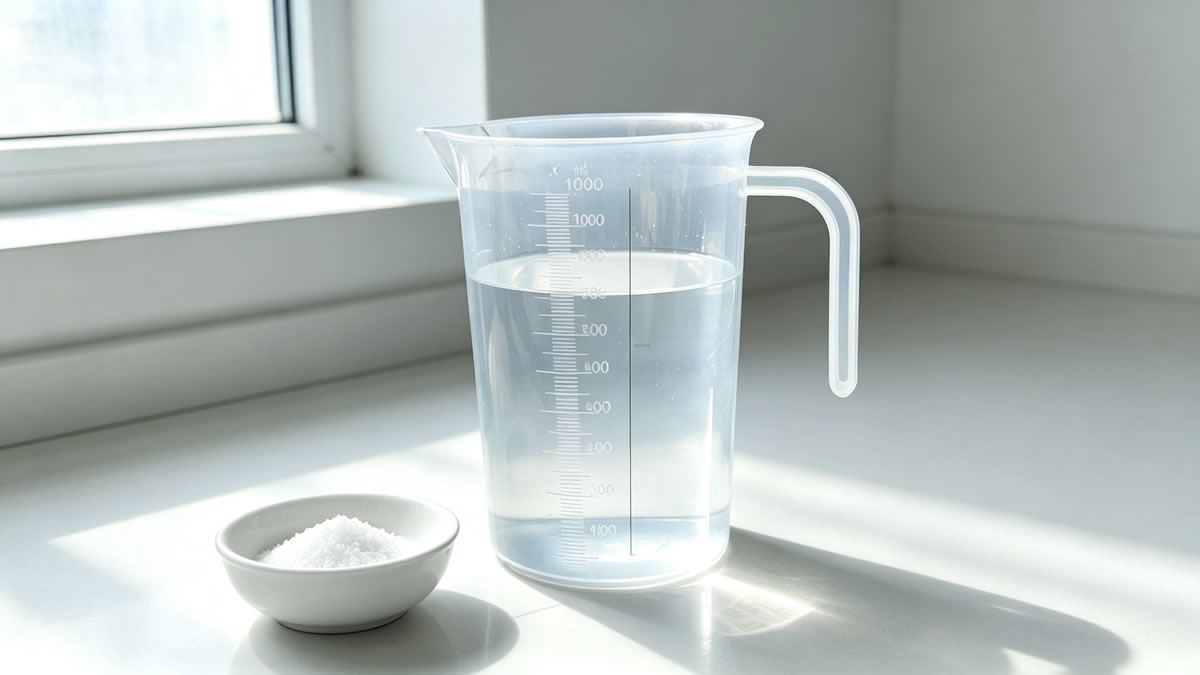
- 1000 ml: the most-used size in our test. One litre is the standard unit for salt mixing (3 g of salt per litre) and most dosing recipes.
- 2000 ml: for larger tanks and bigger water changes. Also the one customers reach for when mixing a fresh bucket of saltwater.
The aquarium measuring cup size range covers every tank on your shelf. Stock all four, and customers self-select by their tank.
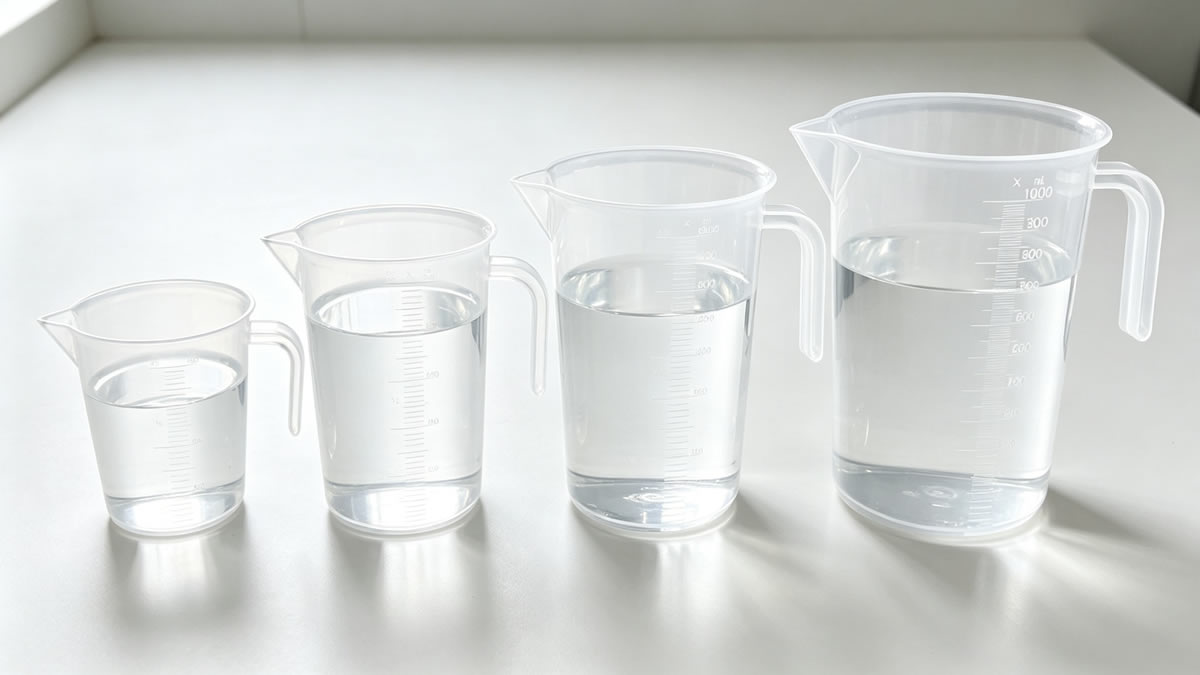
Retailer takeaway: the 1000 ml and 500 ml will sell fastest. Stock those deep, and treat 250 ml and 2000 ml as the set-completers that lift average order value.
3. What the Scale Really Does
In this aquarium measuring cup review, the most-used feature was the graduated scale, specifically the ml + FL OZ dual marking. Hobbyists mix by ratio: 3 g of salt per litre, a 10:1 dilution for algae remover, or diluted liquid fertilizer for planted tanks. A cup without clear markings forces guesswork. With this one, the line is right there.
Two small details matter: the markings are moulded into the PP wall (they do not rub off), and the cup is transparent, so the water level is visible from the side while pouring. Whether you need the aquarium measuring cup ml scale or the FL OZ side, the reading is right at the water line.
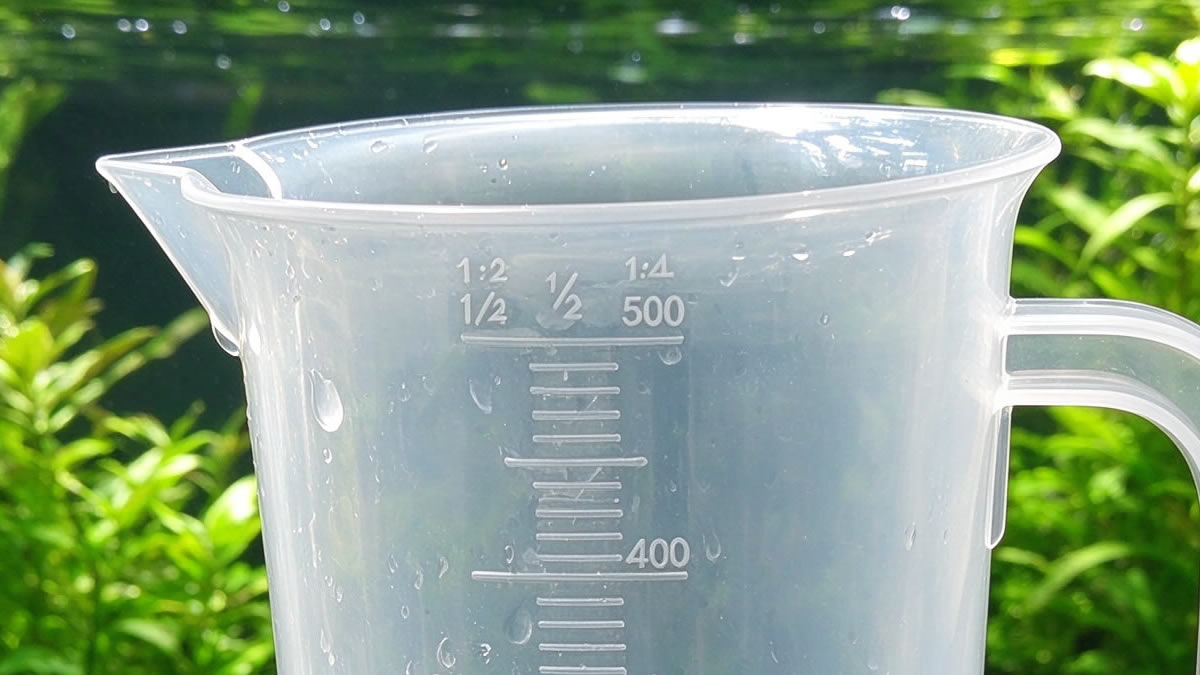
Retailer takeaway: when a customer asks for “a measuring cup for the tank”, show the dual scale first. It is the reason a dedicated cup beats a kitchen one.
4. Hanging on the Rim: the Detail That Keeps It in Use
The hang-on rim handle was the surprise of this aquarium measuring cup review. For three weeks the test cup hung on the tank rim, filled, rinsed and back on the rim. When the handle is there, the cup lives next to the tank. When it is not, the cup lives in a drawer.
It also frees both hands during water changes: the cup hangs while you carry the bucket or position the siphon.
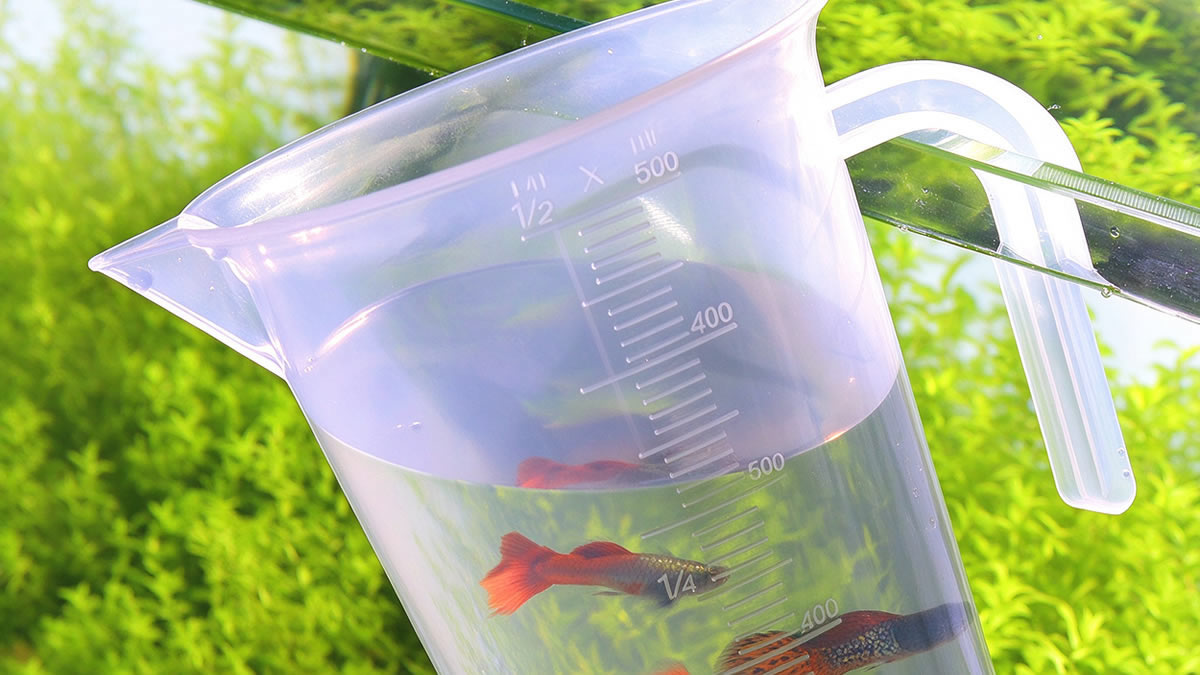
Retailer takeaway: demo the cup hanging on a store tank. Customers notice the rim handle immediately. It is a visible, touchable difference.
5. What It Withstood (and What We’d Watch)
The thickened PP wall survived three weeks of drops, knocks and daily handling without a crack. That is notably better than the glass beaker we compared it against. It does not deform under pressure and resists the scuffs a busy fish room dishes out.
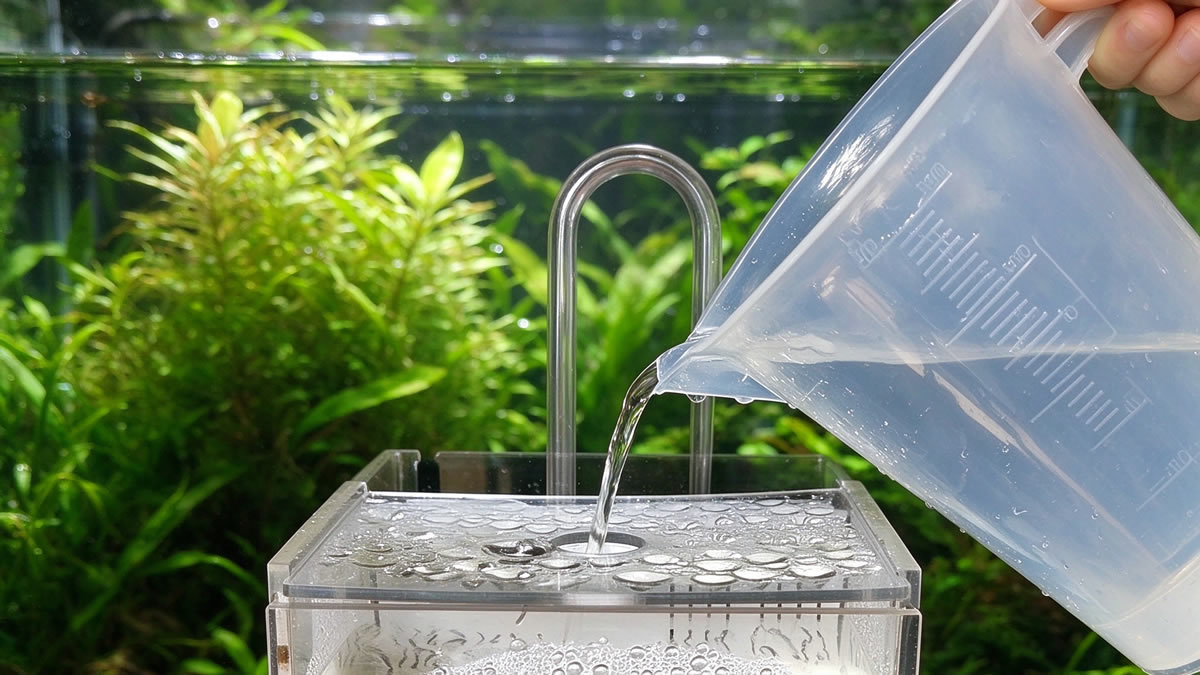
One honest note from this aquarium measuring cup review: the cup is a measuring tool, not a chemical container. Keep it to water, salt and diluted solutions. That is standard practice for any dosing equipment.
Retailer takeaway: lead with the durability story. It answers the “plastic cup? really?” objection before it is asked, and it explains the low return rate.
6. How to Sell It (the Wholesale Angle)
For wholesale buyers, the math is simple: one SKU line, four price points, and a product that pairs with every water-change kit you already sell. MOQ starts at 10 pcs, samples are available, and OEM / private label is open on larger orders.
Bundle the cup with gravel vacuums and siphon kits as a “water change starter set”. The cup is the low-cost add-on that lifts the basket, and it pairs with the rest of the aquarium cleaning tools range.
An aquarium measuring cup for beginners usually starts at 1000 ml. That size is big enough to dose by the litre and small enough for a desktop tank.
If you are building a range of wholesale aquarium measuring cups bulk for multiple retailers, the four-size set is the natural unit. It covers nano, standard and large tanks with one line.
Retailer takeaway: bundle it. The cup is a small-ticket item that makes every water-change purchase feel complete.
For the full retail buying guide, see our aquarium measuring cup complete guide. It covers the whole category, not just the three-week test.
Frequently Asked Questions
Can the measuring cup be used for saltwater?
Yes. The thickened PP body is safe for mixed saltwater and diluted solutions. Rinse it after each use and it stays clear.
What sizes does the aquarium measuring cup come in?
Four sizes: 250 ml, 500 ml, 1000 ml and 2000 ml. The 1000 ml and 500 ml are the fastest-moving for standard tanks.
Does the scale rub off?
No. The ml and FL OZ markings are moulded into the PP wall, so they stay readable through daily use and washing.
Can it hang on the tank rim?
Yes. The cup has a built-in hang-on handle for the tank rim, so it stays next to the tank between uses.
What is the MOQ for wholesale orders?
Standard MOQ is 10 pcs. Samples are available, and the sample fee is deducted from bulk orders.
Conclusion
Three weeks of daily use is enough to judge an everyday accessory. This aquarium measuring cup review confirms the cup does its job, survives the fish room and earns its place on the shelf. It is the kind of small, reliable product that builds repeat orders. Start with the 1000 ml, stock the four-size set, and let customers discover the rest.
About the Author
About the author: Written by the ProAquaWorks editorial team, a B2B aquarium wholesale team that tests and stocks aquarium maintenance tools for retail partners. More about our team.